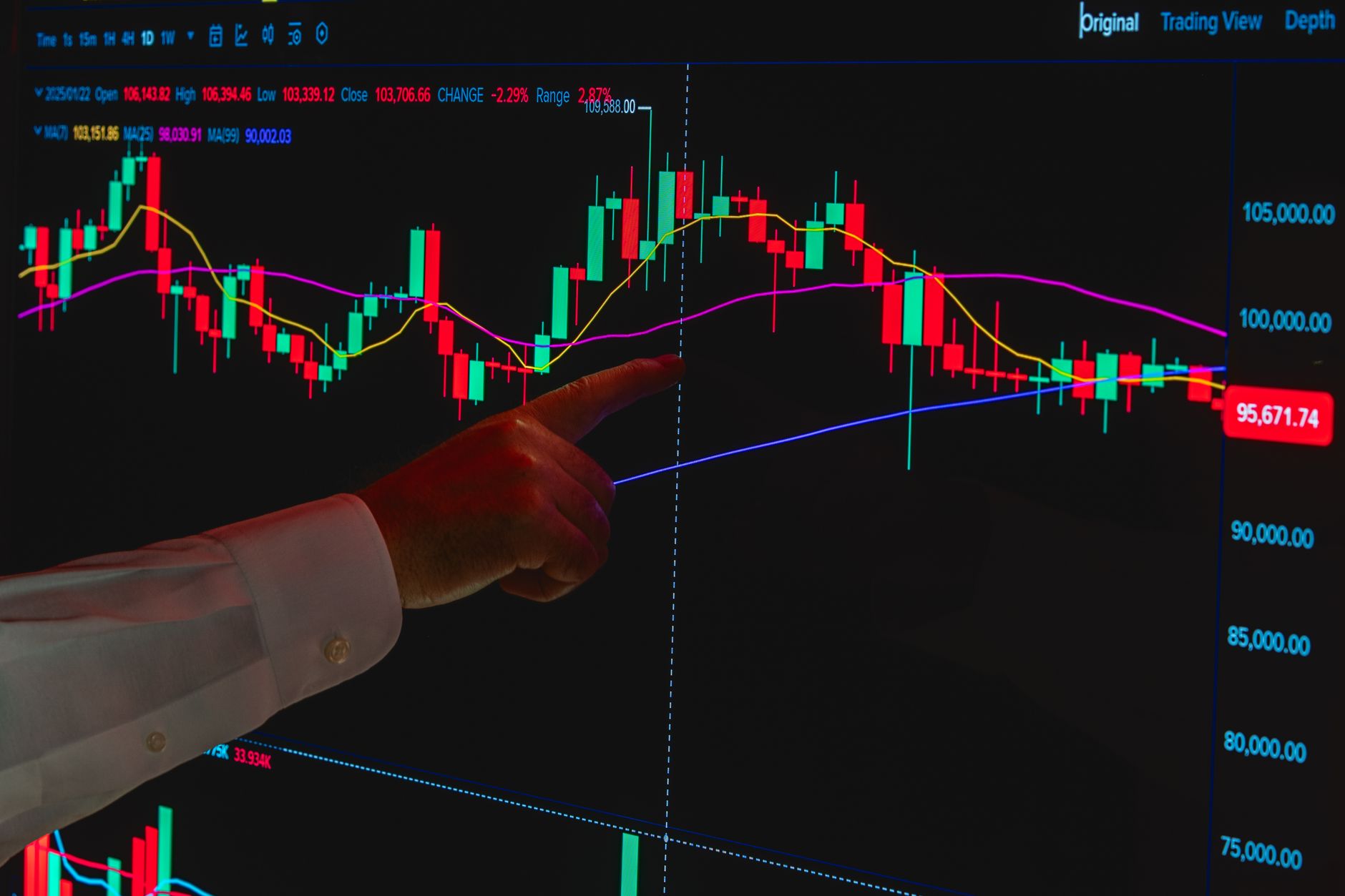
Sensex Down 700 Points: Why Is the Indian Stock Market Falling Today?
The Indian stock market witnessed a sharp sell-off on Tuesday, with the BSE Sensex plunging more than 700 points in intraday trade. The broader Nifty50 also slipped below key support levels, mirroring weakness across global markets. The fall was driven by a combination of global and domestic factors, including persistent foreign institutional investor (FII) outflows, rising US bond yields, and caution ahead of key economic data releases. Investors are now questioning whether this is a temporary correction or the beginning of a deeper downtrend. Analysts say that while the near-term outlook remains uncertain, long-term investors should not panic and instead use corrections to accumulate quality stocks.
"The market is reacting to a confluence of negative global cues, including the US Federal Reserve's hawkish stance and geopolitical tensions. Domestic factors like high valuations and profit-booking are adding to the pressure," analysts say.
One of the primary reasons for today's fall is the relentless selling by foreign portfolio investors (FPIs). According to provisional exchange data, FPIs sold equities worth thousands of crores in the last few sessions. This outflow is largely attributed to the strengthening US dollar and rising US Treasury yields, which make emerging markets like India less attractive for foreign investors. Additionally, the rupee has been depreciating against the dollar, further exacerbating the situation. On the domestic front, retail inflation remains a concern, and the Reserve Bank of India (RBI) is expected to maintain its hawkish stance in the upcoming policy meeting. This has led to fears of higher interest rates for longer, which could impact corporate earnings and economic growth.
Another factor contributing to the market decline is the weak global sentiment. Asian markets, including Japan's Nikkei and Hong Kong's Hang Seng, were trading lower, while European markets opened in the red. The US markets ended sharply lower overnight, with the Dow Jones and Nasdaq falling over 1% each. The sell-off was triggered by better-than-expected US economic data, which fuelled speculation that the Federal Reserve might delay interest rate cuts. This has led to a surge in bond yields, with the 10-year US Treasury yield climbing to multi-year highs. Higher yields typically divert funds away from equities and into safer assets like bonds. Moreover, crude oil prices have been rising, adding to inflationary pressures and hurting oil-importing countries like India.
| Index | Current Level | Change (Points) | Change (%) |
|---|---|---|---|
| BSE Sensex | 72,500 | -700 | -0.96% |
| Nifty50 | 22,000 | -200 | -0.90% |
| Bank Nifty | 47,000 | -500 | -1.05% |
| India VIX | 15.50 | +1.20 | +8.39% |
From a technical perspective, the Nifty50 has broken below its crucial support level of 22,000, which could trigger further downside. The next major support is seen at 21,800, followed by 21,500. On the upside, immediate resistance is placed at 22,200. The Relative Strength Index (RSI) has slipped into oversold territory, indicating that a short-term bounce is possible. However, the overall trend remains bearish, and investors should avoid aggressive buying until the market stabilises. Sector-wise, banking, financial services, and IT stocks were the biggest laggards, while FMCG and pharma stocks showed some resilience. Midcap and smallcap stocks also came under heavy selling pressure, with many hitting lower circuits.
What should investors do in this volatile market? Analysts advise against panic selling and recommend a staggered approach to investing. For long-term investors, corrections like these provide an opportunity to accumulate quality stocks at lower valuations. However, it is important to focus on companies with strong fundamentals, low debt, and consistent earnings growth. Investors with a short-term horizon should remain cautious and wait for the market to stabilise before making fresh commitments. Diversification across asset classes, including gold and fixed income, can help mitigate risks. Keeping some cash in hand to deploy on further dips is also a prudent strategy. As the market navigates through these turbulent times, staying informed and disciplined is key to achieving financial goals.
For more insights on market trends, investment strategies, and personal finance tips, visit MarketToMoney today and take control of your financial future.