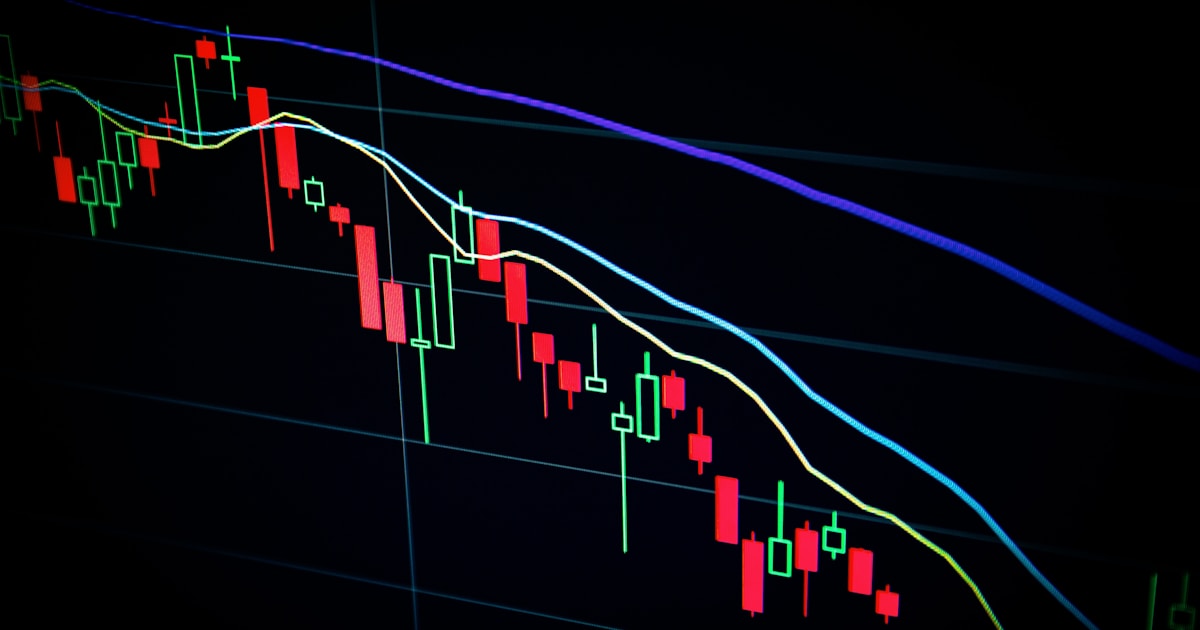
Time in Market Beats Timing the Market
The most expensive words in investing are: "This time it's different." Every market cycle brings a new narrative — a crash, a bubble, a once-in-a-lifetime disruption. And every time, investors who panic-sell or try to time the exit end up worse off than those who stayed put.
The Data Doesn't Lie
A seminal study by researchers at Putnam Investments and the Schwab Center for Financial Research tracked the S&P 500 over a 20-year period. The results were stark: if you stayed fully invested, your annualized return was roughly 9.5%. But if you missed just the 10 best trading days in those 20 years (0.2% of the total days), your return fell to about 6.1%.
The same pattern holds for Indian markets. Consider the Nifty50 from 2010 to 2026:
| Scenario | Final Corpus (₹10L invested) | CAGR |
|---|---|---|
| Stayed fully invested | ₹58.2L | 14.3% |
| Missed best 5 days | ₹42.8L | 11.6% |
| Missed best 10 days | ₹28.3L | 7.2% |
| Missed best 20 days | ₹14.6L | 3.1% |
| Missed best 30 days | ₹7.9L | -0.8% |
The punchline: Missing just 10 of the best trading days out of roughly 4,000 cut your returns in half. And those best days tend to cluster around the worst days — precisely when most investors are exiting the market.
Why Market Timing Fails
Market timing sounds logical in theory. Sell before the crash, buy back at the bottom. But in practice, three things make it nearly impossible:
1. The Best Days Cluster Around the Worst
Analysis of the Nifty50 shows that 6 of the 10 best trading days since 2015 occurred within two weeks of the 10 worst days. The market's sharpest recoveries happen immediately after sharp drops. If you sold during the COVID crash in March 2020, you likely missed the 13% single-day surge on April 7, 2020 — one of the best days in Nifty history.
2. You Need to Be Right Twice
Successful market timing requires predicting both the exit and the re-entry correctly. Getting one right is hard. Getting both right is extraordinarily rare. Studies show that even professional fund managers fail to time the market consistently — retail investors have even slimmer odds.
3. Compounding Punishes Absence
Compounding works exponentially. Every day you're out of the market is a day your money isn't compounding. Over a 20-year horizon, being out for just 2% of the time (the best days) can reduce your ending wealth by more than half. The math is brutal.
| Asset | 20-Year Return (Stayed Invested) | Return (Missed Best 10 Days) | Difference |
|---|---|---|---|
| Nifty 50 | 14.3% CAGR | 7.2% CAGR | -50% |
| S&P 500 | 9.5% CAGR | 6.1% CAGR | -36% |
| NASDAQ 100 | 12.8% CAGR | 8.4% CAGR | -34% |
What Works Instead
If market timing doesn't work, what does? Consistent, disciplined investing. Here's what the data supports:
- Systematic Investment Plans (SIPs) — Investing a fixed amount every month removes emotional decision-making and naturally buys more when prices are low.
- Diversification — Spread across asset classes (equity, debt, gold) reduces the urge to panic-sell any single holding.
- Long-term holding periods — The probability of a positive return from the Nifty50 rises from ~60% in one-year periods to ~98% in 10-year periods.
- Rebalancing — Setting fixed allocation targets and rebalancing annually forces you to sell high and buy low systematically.
The data is clear: Your behaviour as an investor matters more than your ability to predict the market. Time in the market, not timing the market, is what builds lasting wealth.
Use the MarketToMoney dashboard to track your investments, monitor Nifty500 and S&P500 movers, and stay informed — without trying to predict tomorrow's price action.